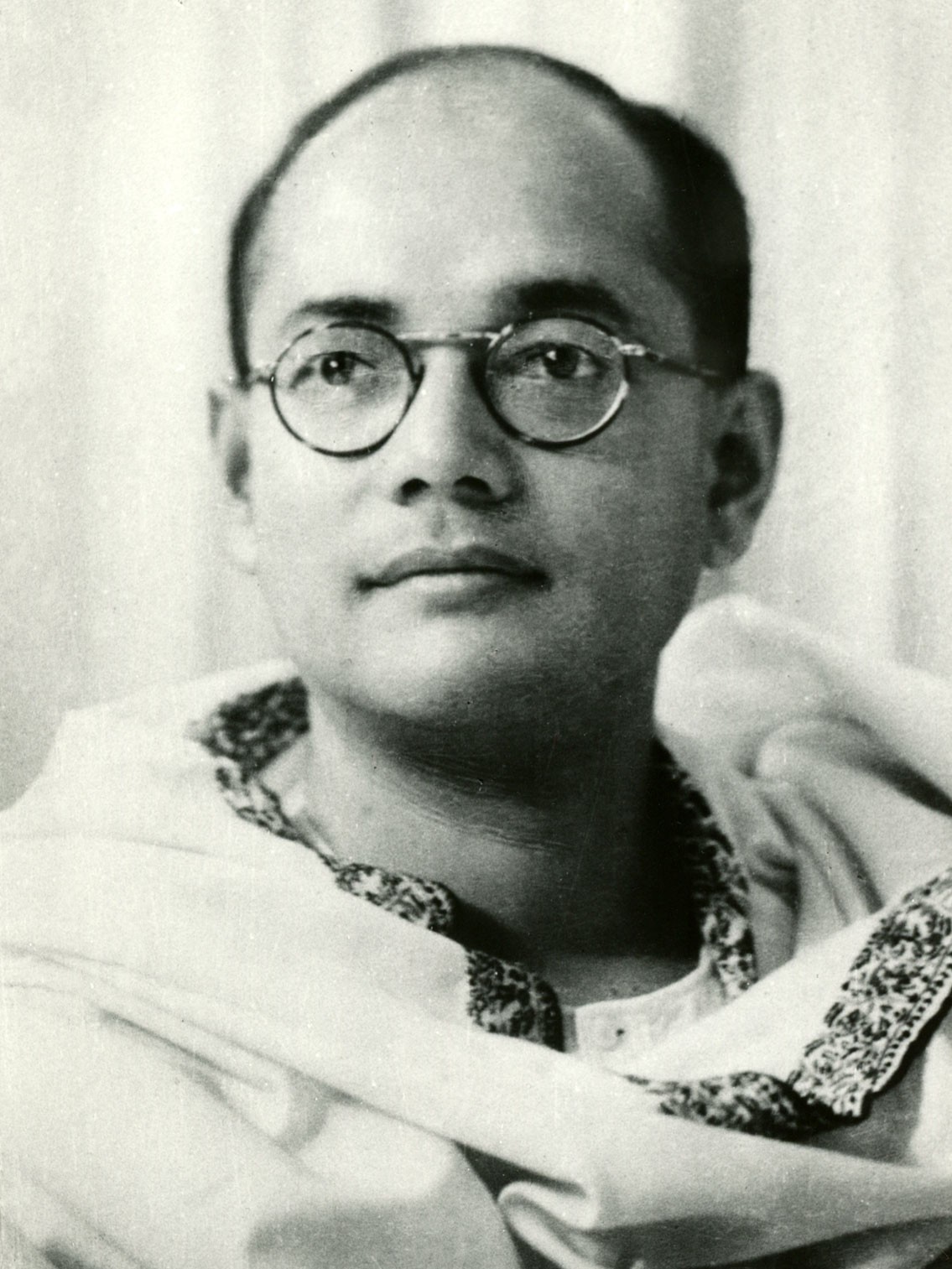
Subhas Chandra Bose
Born:
Died:
1897
1945
State:
Odisha
Summary:
Subhas Chandra Bose was a prominent Indian nationalist leader who advocated complete and immediate independence from British rule. Unlike moderates, he supported radical and direct methods, including armed struggle, to achieve freedom.
Biography:
Subhas Chandra Bose was born on 23 January 1897 in Cuttack, Odisha, into a well-educated Bengali family. He excelled academically and passed the Indian Civil Services exam in England but chose to resign, dedicating himself fully to India’s independence struggle. Early on, he became involved with the Indian National Congress and rose quickly as a charismatic and determined leader.
Frustrated by the moderate approach of Congress leaders, Bose pushed for more direct action against British rule. He founded the Forward Bloc in 1939 to unify radical nationalists. Bose believed that India’s freedom required armed struggle if necessary and sought international support, traveling to Germany and Japan during World War II to gain allies for India’s liberation.
In 1943, Bose led the Indian National Army (INA) and established the Azad Hind Government, a provisional government-in-exile committed to India’s sovereignty. His forces fought alongside the Japanese against the British Indian Army, inspiring thousands of Indians to join the freedom movement. Bose reportedly died in a plane crash in 1945, but his legacy endures as a symbol of courage, determination, and unwavering nationalism.
Key Movements:
- Founding and leading the Forward Bloc
- Presidency of the Indian National Congress (1938–1939)
- Formation of the Indian National Army (INA)
- Collaboration with Axis powers during World War II for India’s liberation
- Azad Hind Government (Provisional Government of Free India)